
 German / Deutsch
  English
  French / Français
  Spanish / Español
  Dutch / Nederlands
  Italian / Italiano
  Polish / Polski
  Norwegian / Norsk
  Danish / Dansk
  Finnish / Suomi
  Swedish / Svenska
  Czech / Česky
  Greek / Ελληνικά
  Slovak / Slovenčina
  Slovenian / Slovenščina
  Estonian / Eesti
  Latvian / Latviešu
  Lithuanian / Lietuvių
  Hungarian / Magyar
  Romanian / Română
  Bulgarian / Български
  Portuguese / Português
 Fibre-optic accessories – adaptors, couplers and junction boxes
DINIC fibre optic accessories for professional fibre optic installations: adaptors and couplers for LC and SC connectors, as well as junction boxes for neat transfer, patch and distribution points.
Whether LC/APC to LC/APC, LC/APC to SC/APC, LC/LC multimode, SC/SC multimode or LC duplex junction box – it is crucial that the connector type, polish, fibre type and simplex/duplex configuration are compatible with the existing fibre-optic run.
Fibre-optic accessories – adaptors, couplers and junction boxes
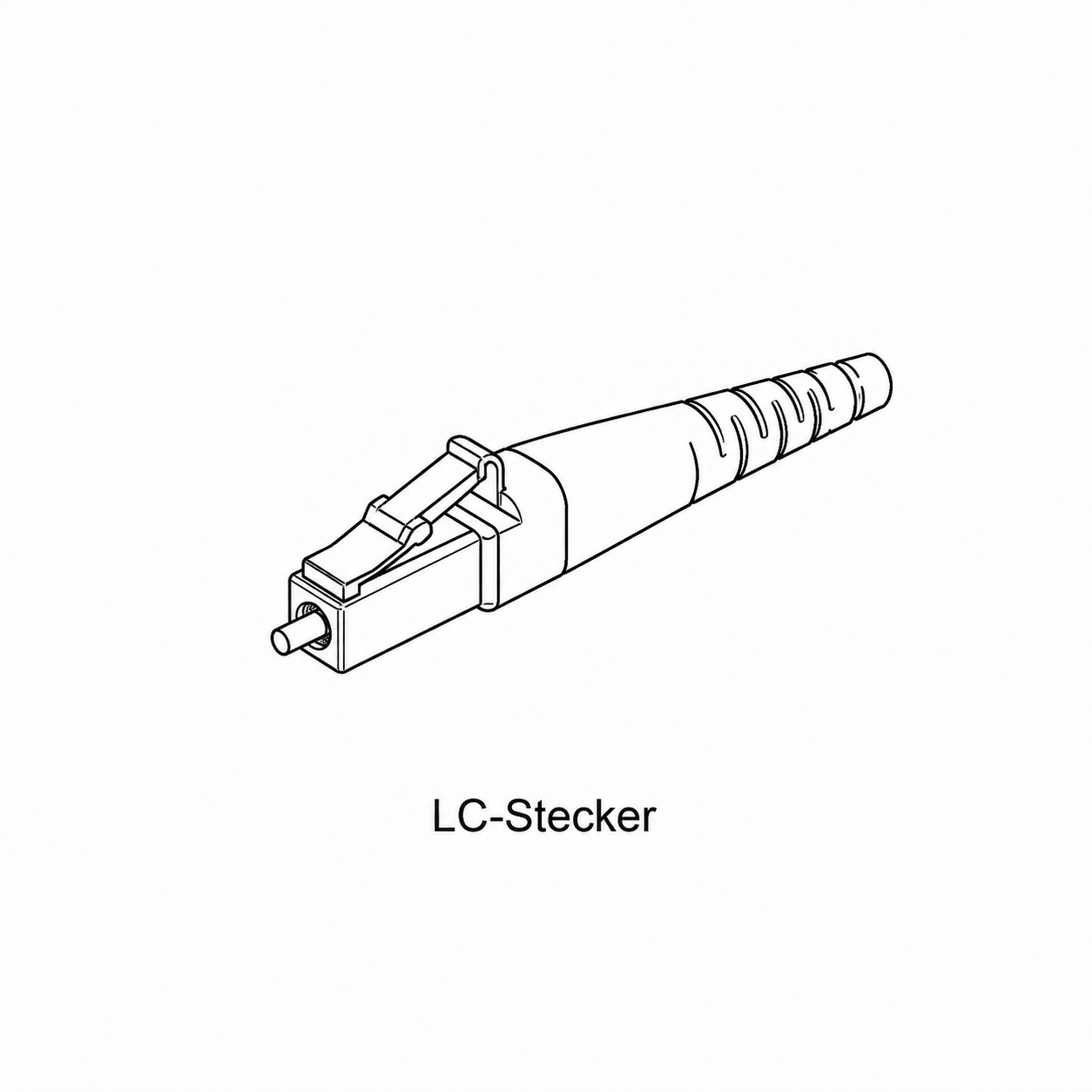 LC compact · 1.25 mm ferrule
.png) SC push-pull · 2.5 mm ferrule
SC push-pull · 2.5 mm ferrule

Choosing the right fibre-optic adaptors and connectors
When it comes to fibre-optic accessories, more factors need to match than just the external shape of the connector. Before purchasing, you should check the connector type, polish, fibre type and whether it is a simplex or duplex version.
An incorrectly chosen adapter may be mechanically unsuitable or result in a technically incorrect combination. It is particularly important to distinguish between LC and SC, APC and UPC, and single-mode and multi-mode.
What fibre-optic accessories do I need?
Extending cables
Two compatible fibre-optic connectors can be connected to each other using a female-to-female coupler – for example, LC/LC or SC/SC.
Converting LC to SC
A suitable adapter can connect different mechanical connector systems, such as LC/APC to SC/APC.
Setting up a connection point
Fibre-optic junction boxes provide a defined wall, distribution or service point for a structured fibre-optic installation.
Adapter, coupler or junction box?
| Accessories | Function | Typical application |
|---|---|---|
| Female-to-female coupler | Connects two matching fibre-optic plugs to one another. | Extend patch cables, or connect patch panels or cable sections. |
| LC to SC adapter | Converts between different mechanical connectors. | Connects an existing LC port to SC infrastructure. |
| Female-to-male adapter | Enables direct mechanical adaptation without the need for an additional short patch cable. | Service, retrofitting and existing connection configurations. |
| Fibre-optic junction box | Creates a defined handover and patch point. | Office, plant room, wall outlet, distribution frame or building cabling. |
Check four details before ordering
LC and SC differ mechanically and have different ferrule sizes.
For single-mode connections, the polish of the connecting surfaces must be compatible.
Select the appropriate adapter or coupler and fibre-optic link according to the intended application.
Check whether a single fibre or a fibre pair is to be coupled or routed.
LC and SC – what is the difference?
| Feature | LC | SC |
|---|---|---|
| Ferrule | 1.25 mm | 2.5 mm |
| Design | Compact | larger and easy to grip |
| Locking mechanism | Latching mechanism | Push-pull |
| Typical applications | Active network technology, modern patch panels, high port density | Patch panels, building distribution systems, telecommunications and existing installations |
| Single-mode / Multi-mode | Both possible | Both possible |
APC and UPC – why does the polish have to be correct?
For single-mode connectors, there are different types of ferrule polish. UPC has a flat or slightly domed contact surface, whilst APC uses an angled-polished contact surface.
APC connectors are often marked in green and are used, amongst other things, in FTTH, FTTB and telecommunications connections.
What does an LC/APC to SC/APC adapter do?
An LC/APC-to-SC/APC adapter solves a mechanical connection problem: an LC/APC connector is available on one side and an SC/APC connector on the other.
The adapter enables these different connector types to be connected without altering the actual optical transmission technology.
When do I need LC/APC or SC/APC?
APC components are used particularly frequently in OS2 single-mode, FTTH and fibre-optic router applications.
MAG has a dedicated category for this, featuring LC/APC and SC/APC components for fibre-optic routers, ONTs and fibre-optic connection sockets.
View APC adaptors and couplers for fibre-optic connections »
LC/LC multimode coupler – what is it for?
An LC/LC duplex connector connects compatible LC duplex multimode connectors or patch cables.
Typical applications include:
- Extending an existing LC multimode connection
- Connecting patch cables
- Installation in distribution or connection solutions
- Servicing and restructuring existing fibre-optic links
SC/SC multimode coupler – what is it for?
The SC/SC duplex coupler connects compatible SC multimode connectors to one another.
It is particularly suitable for existing SC infrastructures, patch panels, floor distribution points and equipment rooms where SC is used as the connector system.
When is a fibre-optic connection box useful?
A fibre optic junction box creates a fixed and defined handover point between a permanently installed fibre optic link and connecting patch cables.
This can offer several advantages:
- well-organised building cabling
- a clearly defined handover point
- Protection of the permanently installed cable
- Patch cables can be replaced as required
- easier maintenance and documentation
The fibre-optic junction box offered in this category is fitted with two LC duplex adaptors. :contentReference[oaicite:1]{index=1}
Does an additional connector cause attenuation?
Yes. Every additional connector represents a further optical transition within the link and contributes to the overall attenuation budget.
For this reason, fibre-optic links should not be extended with an ever-increasing number of adaptors and couplings without a technical justification. In professional installations, the number of connection points should be documented and taken into account in the optical link budget.
Selecting the right cable for fibre-optic accessories
Adapter or a fibre-optic cable that fits directly?
If two different connector types are to be permanently connected to one another, an adapter is not always required.
For example, an LC/SC OM4 patch cable connects an LC and an SC multimode end directly to one another.
Adapters, on the other hand, are particularly useful when an existing installation needs to be flexibly adapted, extended or rerouted at a defined handover point.
Do not confuse single-mode and multimode accessories
This category contains accessories for various fibre-optic applications. These include both APC components for single-mode/simplex and LC/LC and SC/SC couplers for multimode/duplex. :contentReference[oaicite:2]{index=2}
Frequently asked questions about fibre optic adaptors and couplers
What is the difference between a fibre optic adapter and a connector?
A coupler usually connects two matching connectors of the same type. The term ‘adapter’ is used more broadly and can also refer to solutions that connect different connector systems, such as LC and SC.
Can I connect LC and SC to each other?
Yes. To do this, you can use either a dedicated LC/SC adapter or a pre-terminated LC/SC cable. The fibre type and optical configuration must also be compatible.
Can a fibre optic adapter convert multimode to single-mode?
No. A passive adapter does not convert the fibre type. Multimode and single-mode components must be selected to suit the entire optical path.
Can I connect APC and UPC using an adapter?
APC and UPC should not be connected directly to one another, as the ferrules have different end faces. The plug and coupler must be compatible with the intended polish.
What does LC/APC to SC/APC mean?
An LC connector with APC polish is used on one side and an SC connector with APC polish on the other. The adapter adapts the mechanical connector design accordingly.
When do I need an LC/LC coupler?
An LC/LC connector is used when two compatible LC plugs or LC patch cables are to be connected to one another.
When do I need an SC/SC coupler?
SC/SC is suitable for connecting compatible SC connectors, for example within existing multimode patch panel and distribution installations.
Does a fibre-optic coupler cause signal loss?
Every additional optical connection point contributes a certain amount of insertion loss to the overall link. For longer or technically complex links, this should be taken into account in the optical loss budget.
Which adapter do I need for a fibre-optic router?
This depends on the connectors on the router or fibre module and the GF-TA or fibre optic socket. Typical combinations are LC/APC to LC/APC and LC/APC to SC/APC. The MAG Router Guide is available to help you make the right choice.
Are green fibre-optic accessories always APC?
Green is usually used to identify APC connectors. However, when placing an order, you should always check the actual technical product designation and not rely solely on the colour.
Selecting fibre optic accessories suitable for the fibre optic link
Adapters, couplers and junction boxes for multimode networks, as well as APC components for OS2, FTTH and router applications.