 German / Deutsch
  English
  French / Français
  Spanish / Español
  Dutch / Nederlands
  Italian / Italiano
  Polish / Polski
  Norwegian / Norsk
  Danish / Dansk
  Finnish / Suomi
  Swedish / Svenska
  Czech / Česky
  Greek / Ελληνικά
  Slovak / Slovenčina
  Slovenian / Slovenščina
  Estonian / Eesti
  Latvian / Latviešu
  Lithuanian / Lietuvių
  Hungarian / Magyar
  Romanian / Română
  Bulgarian / Български
  Portuguese / Português
 -
You do not have any products in your shopping cart yet.
Power extension lead for small appliances
Power extension cables for IT equipment in accordance with IEC 60320
DINIC power extension cables for PDUs, UPSs, servers, racks and professional power distribution systems. Select the appropriate plug combination based on the power source and equipment connection.
Find the right connection quickly:
C13/C14 special versions: coloured · LSZH / halogen-free · multiple approvals · IEC plugs explained →


Choosing the right extension lead for IT equipment
A reliable IEC power connection can only be achieved when the connector, current-carrying capacity, conductor cross-section, cable length and installation conditions are all compatible. Therefore, the selection should not be based solely on the physical appearance of the plug.
1
Check the equipment connection Does the equipment require a C5, C13, C19 or another IEC connector?
2
Determine the power source Check the available output from the PDU, UPS or IEC power distribution unit.
3
Electrical specifications The rated current, cross-section, cable and technical specifications of the product must be suitable for the application.
4
Select the design Choose the length, angle, colour, LSZH and approvals to suit the installation.
IEC extension cables for IT equipment: a direct comparison
| Cable | Power source | Equipment | Typical application | Category |
|---|---|---|---|---|
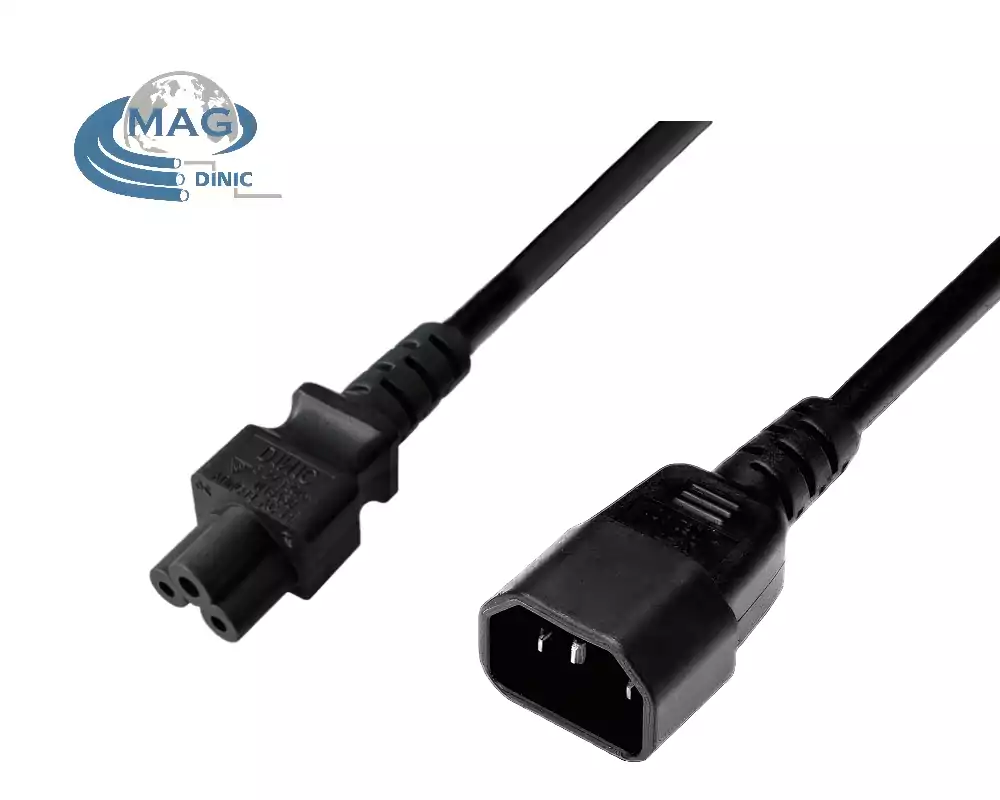
| C14 → C5 | C13 output | C6 input | Laptop power adaptors, projectors, compact IT equipment | C5/C14 → |
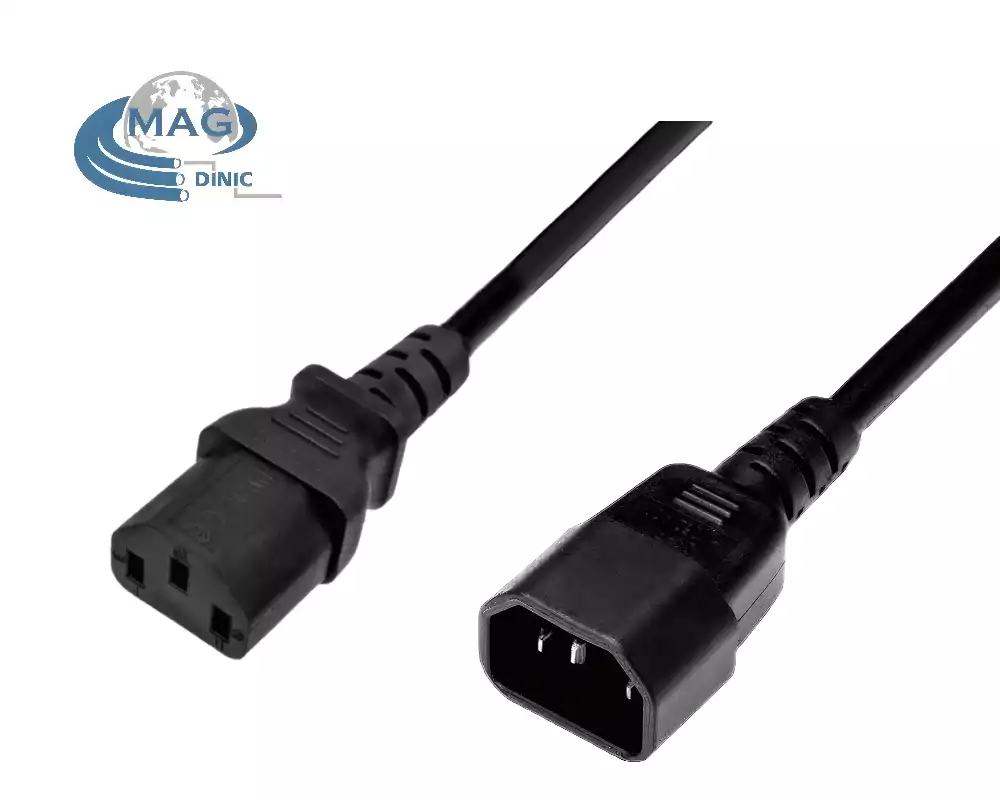
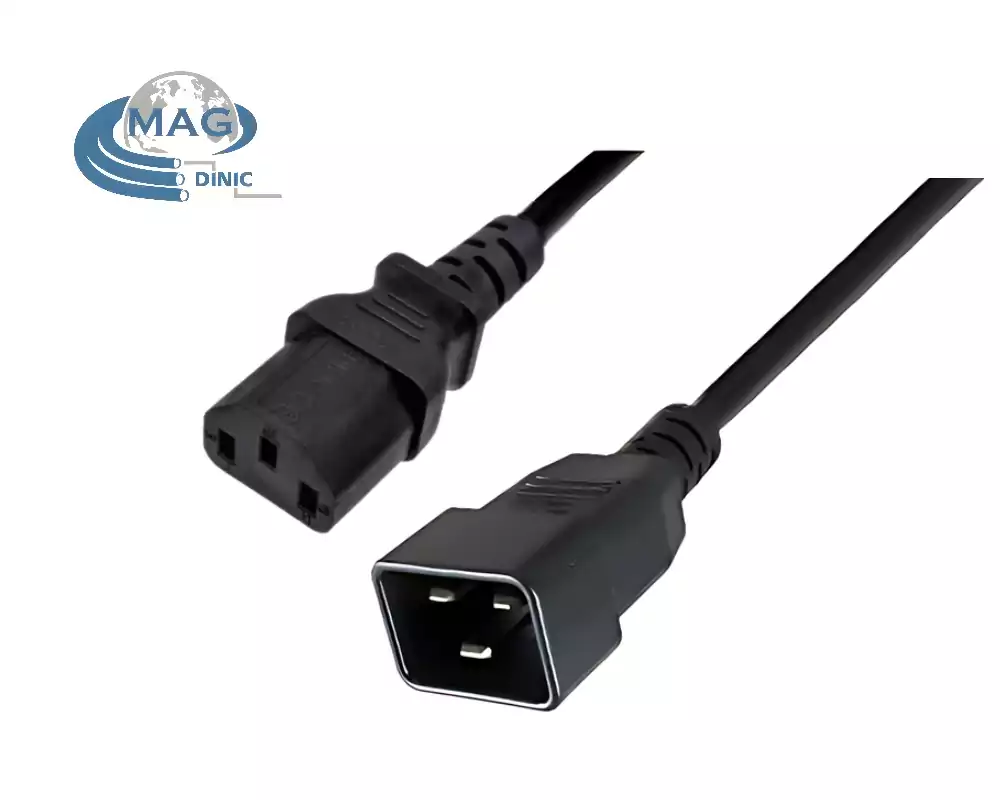
| C14 → C13 | C13 output | C14 input | Servers, switches, PCs, monitors, PDUs/UPSs | C13/C14 → |
| C20 → C13 | C19 output | C14 input | C19 power distribution to standard C14 devices | C13/C20 → |
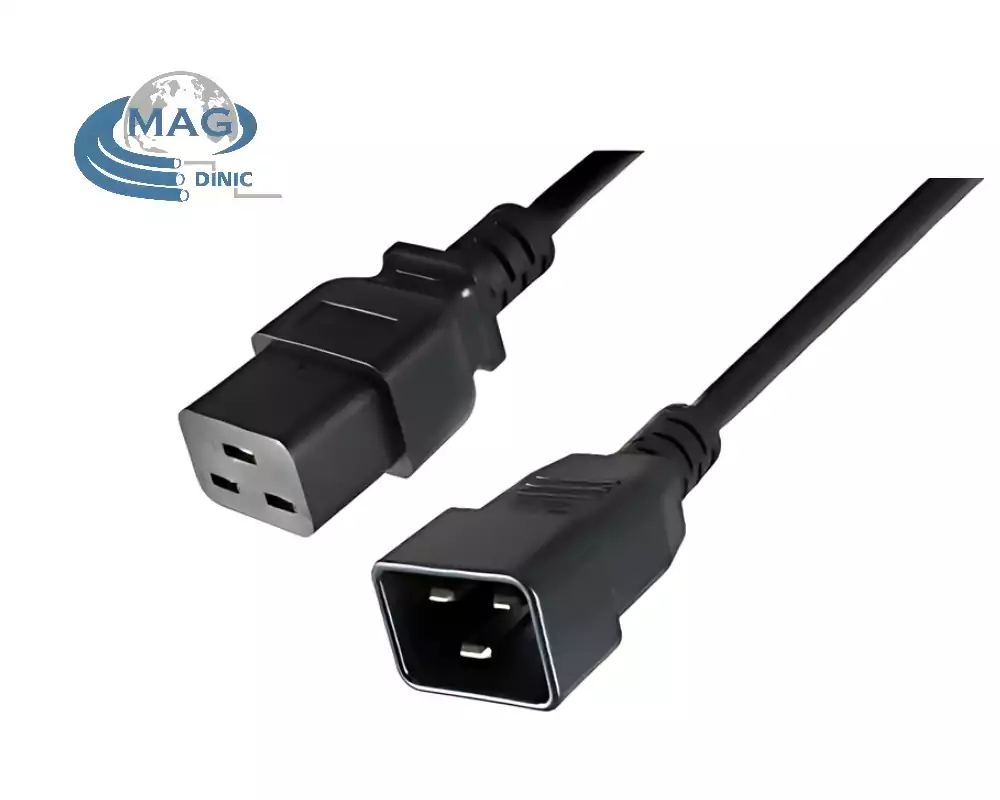
| C20 → C19 | C19 output | C20 input | 16 A IEC power paths, PDU, UPS, server, storage | C19/C20 → |
CLASSIC IT CONNECTION
C13 / C14
C13/C14 is the most common IEC connection for PCs, monitors, switches, servers and numerous other IT and office devices. Please refer to the specific rated values for each product.
C13/C14 IT extension leads →
16 A CLASS
C19 / C20
C19/C20 is designed for higher-power IEC loads. The connectors belong to the 16 A/250 V class and are used, for example, in PDUs, UPSs, servers and storage systems.
C19/C20 16 A cables →C13/C14: Standard, coloured, halogen-free or multi-approval?
For the most widely used C13/C14 connection, various versions are available to meet different project requirements.
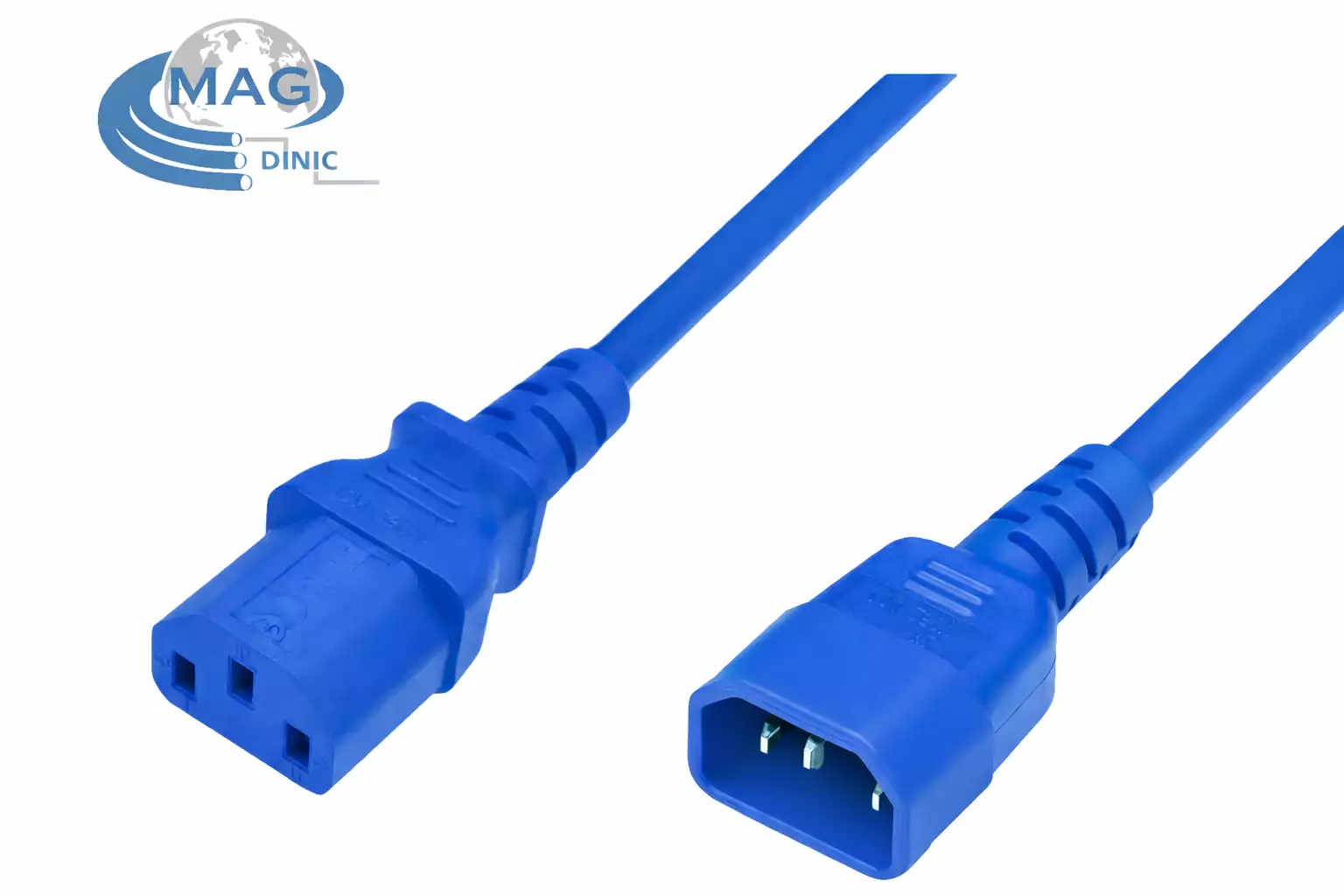
Standard black Wide range of lengths, cross-sections, angle variants and special shapes. Coloured For the visual identification of power paths, racks and groups of equipment. LSZH / halogen-free For projects requiring halogen-free cable materials and reduced smoke emission. Multiple approvals For international projects requiring approvals specified for individual products.
Further selection criteria
Cable length As short as practical and as long as required for a tension-free installation.
Conductor cross-section Select 0.75, 1.0 or 1.5 mm² depending on the item, length and application.
90° connection Angled couplings facilitate cable routing where installation depth is limited.
Approvals Take into account the target market and the approvals specified for the specific product.
Device with a C16 connection? Then check for C15 instead of C13
C13 and C15 look similar, but are not intended for the same temperature range. For devices with a C16 input, a C15 hot appliance connector is required.
See C14 to C15 hot appliance extension leads →Secure IEC connections against accidental disconnection
For PDU, UPS and rack installations, depending on the application, SecureSleeve slip-on sleeves or lockable connectors can help to reduce the risk of accidental disconnection.
SecureSleeve & IEC-LOCK →Guide to cable security →
Cable or compact power adaptor?
If no additional cable length is required, depending on the plug combination, a compact IEC power adaptor may be a more sensible solution than an extension lead.
View IEC power adaptors →Special case: C14 plug to C19 socket
An extension cable with a C14 plug and a C19 socket would allow an appliance designed for C19/C20 to be connected to a C13/C14 power circuit. This would allow different current ratings to be combined.
An appliance that draws more current than the upstream C13/C14 power path allows may overload the cable or plug connection. MAG GmbH therefore does not offer this plug combination.
Frequently asked questions about cold appliance extension leads
What is a low-voltage extension lead?
An IEC extension lead connects two compatible IEC 60320 sockets, thereby extending or adapting the power path between an IEC power source and a connected appliance.
What is the difference between C13 and C14?
C13 is the most common IEC connector on the cable. C14 is its corresponding counterpart and is found, for example, as a device input on servers, PCs, monitors and network devices.
When do I need C19/C20 instead of C13/C14?
C19/C20 is used for the 16 A class and corresponding devices with a C20 input. Typical applications include PDUs, UPSs, high-performance servers, storage systems and industrial equipment.
What does C20 to C13 mean?
Such a cable has a C20 plug and a C13 socket. It can, for example, connect a C19 output on a PDU or UPS to a device with a C14 input.
When are coloured IT extension cables useful?
Coloured C13/C14 cables can visually distinguish between power paths, groups of devices, racks or power supply systems, thereby aiding maintenance and troubleshooting.
What does LSZH mean?
LSZH stands for Low Smoke Zero Halogen and refers to halogen-free cable materials designed to minimise smoke emission. The specific product characteristics can be found in the relevant product data.
What cable length and cross-section should I choose?
The length and conductor cross-section must be suitable for the installation, load and specific product. For electrical design purposes, the technical data of the complete connection is always decisive.
Extension cables for project and series production requirements
Do you require a different cable length, colour, angle, plug combination, labelling or packaging? MAG GmbH supports commercial customers with project-specific cable and adapter solutions.