
C13 to C14 power extension leads – black

In the ‘C13 to C14, black’ category, specialist retailers, system integrators and installers will find reliable DINIC power extension cables for clean power extension in accordance with IEC 60320 – ideal for IT/network and AV installations as well as industrial applications.

MAG GmbH supplies these black C13/C14 extension cables in practical lengths and designs, e.g. as short adaptors (30 cm), with 90° angled plugs or with a larger conductor cross-section for more demanding environments.

Advantages and typical applications of the DINIC C13 to C14 extension leads (black)

Your benefits at a glance

  • Standardised IEC connectors (C13 plug to C14 socket) for compatible devices and PDUs
  • A range of lengths and conductor cross-sections (e.g. 0.75 / 1.0 / 1.5 mm²) for planning tailored to your needs
  • Variants with 90° angled plugs and short lengths for confined installation spaces within the rack
  • Robust, precision-engineered construction for long-term mating cycles in operation
  • Depending on the version, with VDE/ENEC or multi-approvals for international projects

Typical applications: C13 to C14

  • Extension cables between PDUs/UPSs and servers, switches, storage systems or workstations
  • Neat rack cabling in the data centre (optimised lengths, reduced cable stress)
  • Power supply for monitors, KVM components and peripherals via IT power sockets
  • Conference and media technology (displays, digital signage, AV racks) in professional installations
  • Industrial and control cabinet environments, where angled plugs save space and reduce the risk of kinking
Select the appropriate length, conductor cross-section and, where applicable, angled or short versions, as well as the required approvals, depending on the application; for project-based business, packaging and logistics options (e.g. bulk) are also relevant.

1 to 18 (from a total of 18)

Choosing the right C13 to C14 power extension lead

When choosing a C13/C14 extension lead, it is not just the connectors that are important. Depending on the installation, you should also consider the cable length, conductor cross-section, plug orientation, approval status and any required protection for the connection.

Standard

Straight C13/C14 extension lead

The classic solution for power connections between PDUs, UPSs, power distribution units and equipment with an IEC C14 input.

View example: 1.80 m →
Limited space

C13 90° angled

Where installation depth is limited, angled C13 connectors can make it easier to route cables behind servers, switches, monitors and other equipment.

View the 90° version →
Additional cross-sectional reserve

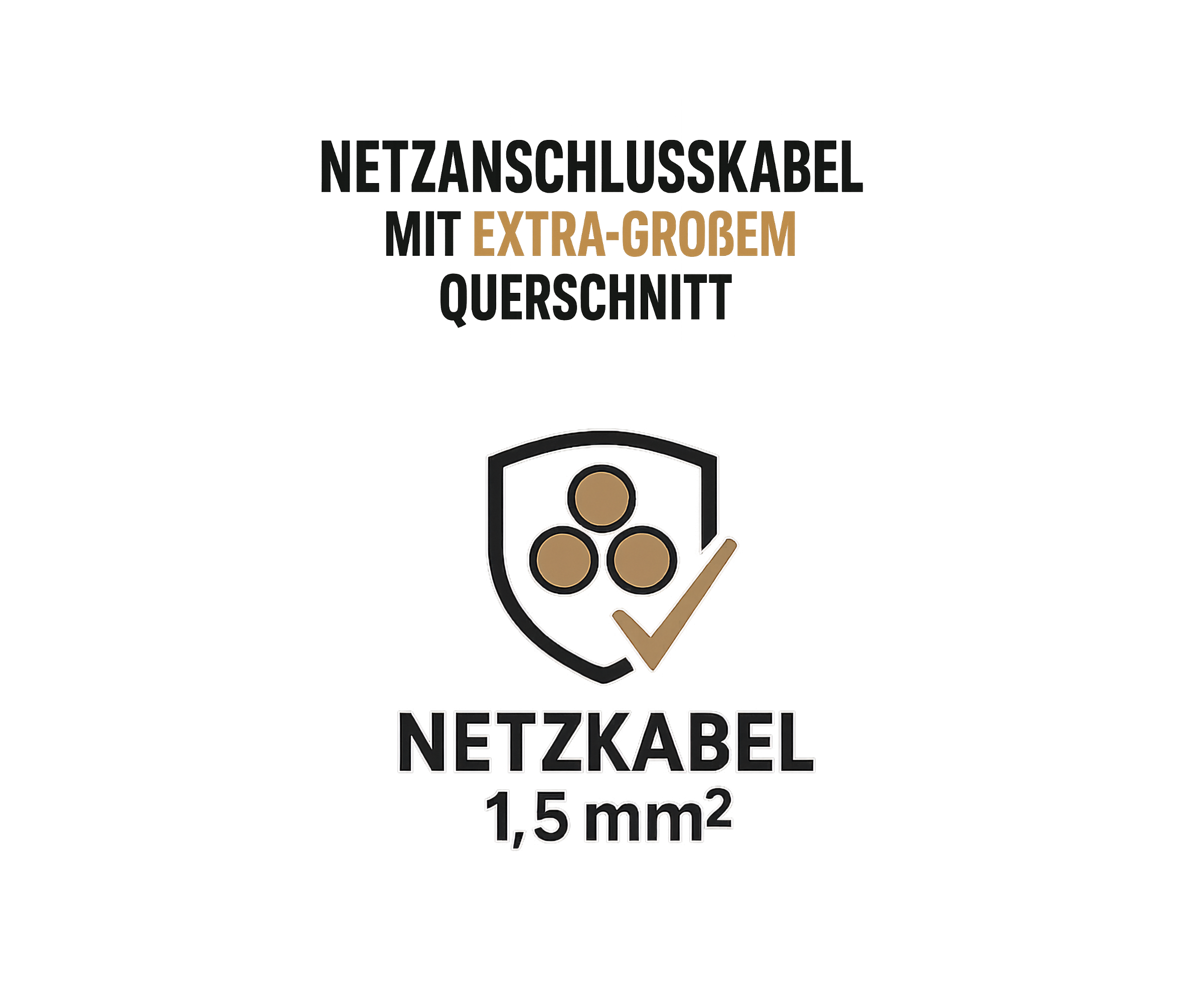
C13/C14 with 1.5 mm²

Kennzeichnung für DINIC Netzkabel mit 1,5 mm² Leiterquerschnitt

For applications where a larger conductor cross-section is specifically required, DINIC C13/C14 extension cables with 3 × 1.5 mm² are available.

View the 1.5 mm² version →
To prevent accidental disconnection

C13 with locking mechanism

For applications where the C13 connection requires additional mechanical protection against accidental disconnection.

View the lockable version →

C13 or C14 – which is the plug and which is the socket?

These terms are often used interchangeably in everyday language. For a standard C13/C14 extension lead for low-voltage equipment, the following applies:

IEC 60320 C13 C13 is the cold appliance coupler on the cable. It is typically plugged into a C14 appliance inlet.
IEC 60320 C14 C14 is the appliance plug. On extension leads, there is a C14 plug at the other end of the cable.

IEC 60320 C13, C14 and other connectors at a glance →

What is a suitable cable length?

Short connections Ideal in a rack where the PDU and the appliance are close together and unnecessary excess cable should be avoided.
Medium lengths For typical equipment, workstation, network and technical installations.
Longer distances For greater distances between the power distribution unit and the load. The installation should be carried out without placing any permanent tension on the connection.

Conductor cross-section: 0.75 mm², 1.0 mm² or 1.5 mm²?

The conductor cross-section is a technical selection criterion and should always be considered in conjunction with cable length, electrical specifications, connectors and the details of the specific product. A larger cross-section does not automatically mean that every application may be operated at a higher power rating – the permissible values of the complete connection are decisive.

Cross-sectional area Classification Selection guide
0.75 mm² Compact standard designs and short to medium connection lengths Please refer to the technical data for this item
1.0 mm² Available in various longer and professional versions Select according to length and application
1.5 mm² Larger conductor cross-section for additional cross-sectional reserve The overall connector and product data remain authoritative

Understanding cable designations · AWG and conductor cross-section

Secure power cables against accidental disconnection

Various securing options are available for C13/C14 connections. SecureSleeve slip-on sleeves can be retrofitted to existing connectors to enhance their holding force; IEC-LOCK offers a mechanical locking mechanism, depending on the version.

Guide to safe IEC power connections →
View SecureSleeve & IEC-LOCK →

Coloured labelling instead of standard black cables?

If different power paths, racks, groups of equipment or supply areas need to be quickly distinguished visually, coloured C13/C14 cables can aid documentation and maintenance.

Coloured C13/C14 extension leads →

Further C13/C14 variants

Frequently asked questions about C13/C14 power extension leads

What is a C13-to-C14 low-voltage extension cable?

It is an IEC 60320 extension cable with a C14 plug and a C13 socket. It is used, for example, to connect a C13 outlet on a PDU or UPS to a device with a C14 input.

Where are C13/C14 extension cables used?

Typical applications include server and network cabinets, data centres, PDU and UPS systems, office and workstation equipment, AV equipment, laboratories, test equipment and industrial installations.

When is an angled C13 connector useful?

A 90° plug can be useful where there is limited installation depth behind equipment. It allows for organised cable routing and reduces the space required directly behind the equipment connection.

When should I choose a 1.5 mm² version?

A 1.5 mm² version is a good option if the installation specifically requires a larger conductor cross-section and additional cross-sectional reserve. For the electrical design, the permissible specifications of the complete cable and the plug connection remain decisive.

How can a C13/C14 connection be secured against being pulled out?

Depending on the application, retrofittable SecureSleeve slip-on sleeves, IEC-LOCK connections or mechanical locking mechanisms on the device itself may be suitable. The appropriate solution depends on the existing connector and the desired level of protection.

Are C13/C14 cables also available in halogen-free versions or with international approvals?

Yes. The DINIC range includes separate categories for halogen-free LSZH versions and C13/C14 cables with various international approvals.

C13/C14 extension cables for project and series production requirements

Do you require a different length, a specific conductor cross-section, a particular plug orientation, labelling, packaging or recurring quantities? MAG GmbH supports commercial customers with project-specific cable and adapter solutions.