 German / Deutsch
  English
  French / Français
  Spanish / Español
  Dutch / Nederlands
  Italian / Italiano
  Polish / Polski
  Norwegian / Norsk
  Danish / Dansk
  Finnish / Suomi
  Swedish / Svenska
  Czech / Česky
  Greek / Ελληνικά
  Slovak / Slovenčina
  Slovenian / Slovenščina
  Estonian / Eesti
  Latvian / Latviešu
  Lithuanian / Lietuvių
  Hungarian / Magyar
  Romanian / Română
  Bulgarian / Български
  Portuguese / Português
 -
You do not have any products in your shopping cart yet.
IEC C13, C15 and C17 compared – differences, confusion and compatibility
IEC C13, C15 and C17 are easy to confuse. Externally, the three plug types are the same basic size and have a very similar shape. It is only when you look at the plug face that the small but important differences become clear: C13 has an earth contact, C17 does not – and C15 also has the shape coding required for the C16 connection for heating appliances.
These differences determine which connector fits C14, C16 or C18, and when a connection cable can be replaced with a different IEC variant.
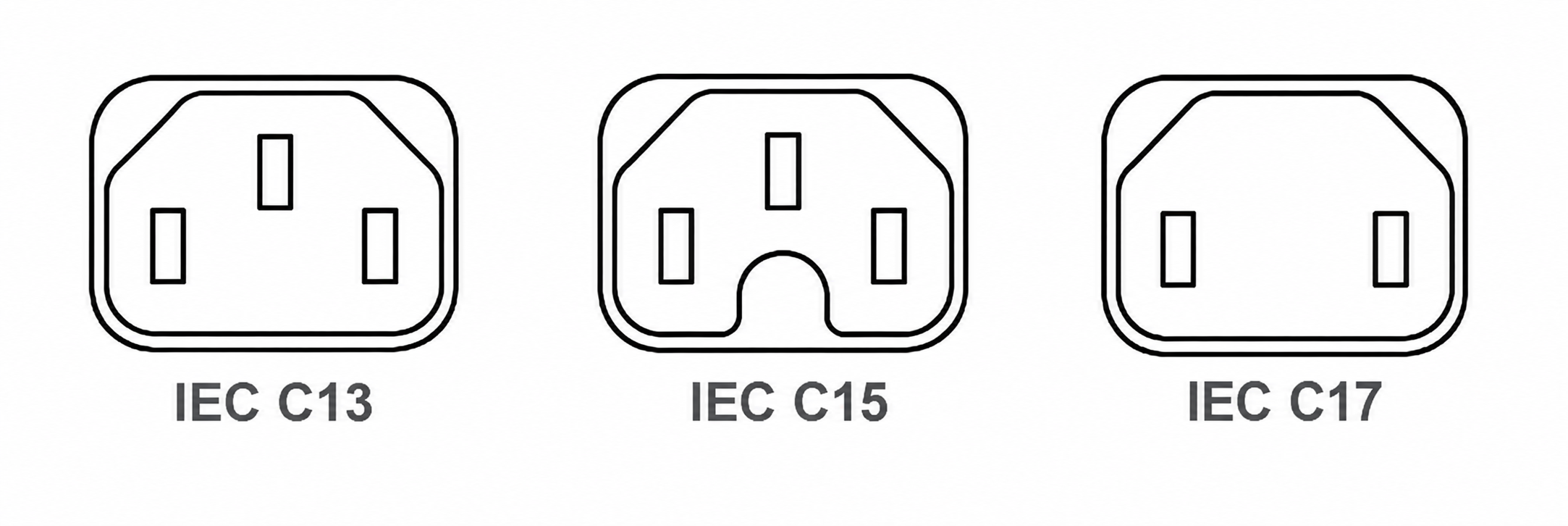
Quick answer: What is the difference between C13, C15 and C17?
- C13: three-pin with earth; the standard counterpart is C14.
- C15: three-pin with earth; designed for higher temperature requirements and typically used with C16; also fits C14.
- C17: two-pin without earth; its standard counterpart is C18.
- Special feature: C13 can also be used with C18. C17, on the other hand, does not fit C14. Similarly, C15 can be used with C14, but C13 cannot be used with C16.
C13, C15 and C17 at a glance
IEC C13
3-pin with earthThe classic IT connector for many devices in IT, office, networking and industrial applications.
- Standard counterpart: C14
- Also fits C18
- Does not fit C16
IEC C15
3-pin with earth conductor for hot-plug devicesVery similar to C13, but features the additional shape code for the C16 hot appliance connection.
- Standard counterpart: C16
- Also fits C14
- Designed for higher temperature requirements than C13
IEC C17
2-pole without earth conductorTwo-pole device coupler for appropriately designed devices without an earth connection.
- Standard counterpart: C18
- No earth contact
- Does not fit C14
Which fits where? Important combinations
It is not only the connector on the cable that is crucial, but also the device plug fitted to the appliance. C13, C15 and C17 are often referred to generically as ‘low-voltage appliance plugs’ in everyday use, but technically the designs differ.
| Connector on the cable | Appliance connection | Does it fit? | Explanation |
|---|---|---|---|
| C13 | C14 | Yes | Standard C13/C14 low-voltage appliance connection with earth conductor. |
| C13 | C18 | Yes | The C18 has no earth contact; the additional earth contact on the C13 has no mating contact there. |
| C13 | C16 | No | The mechanical coding of the C16 prevents a standard C13 plug from being inserted. |
| C15 | C16 | Yes | Standard hot-swappable connection C15/C16. |
| C15 | C14 | Yes | The additional C15 shape coding does not interfere with the C14; therefore, C15 can also be used there. |
| C17 | C18 | Yes | Standard two-pole C17/C18 connection without a protective conductor. |
| C17 | C14 | No | C17 has no earth contact and is not mechanically designed for C14. |
Important: The fact that two IEC connectors fit together mechanically does not automatically mean that every connecting cable is suitable for every application. In addition, factors such as current-carrying capacity, voltage, temperature requirements, conductor cross-section, country-specific plugs and the necessary approvals must also be compatible.
IEC C13 – with earth contact for C14 and also C18
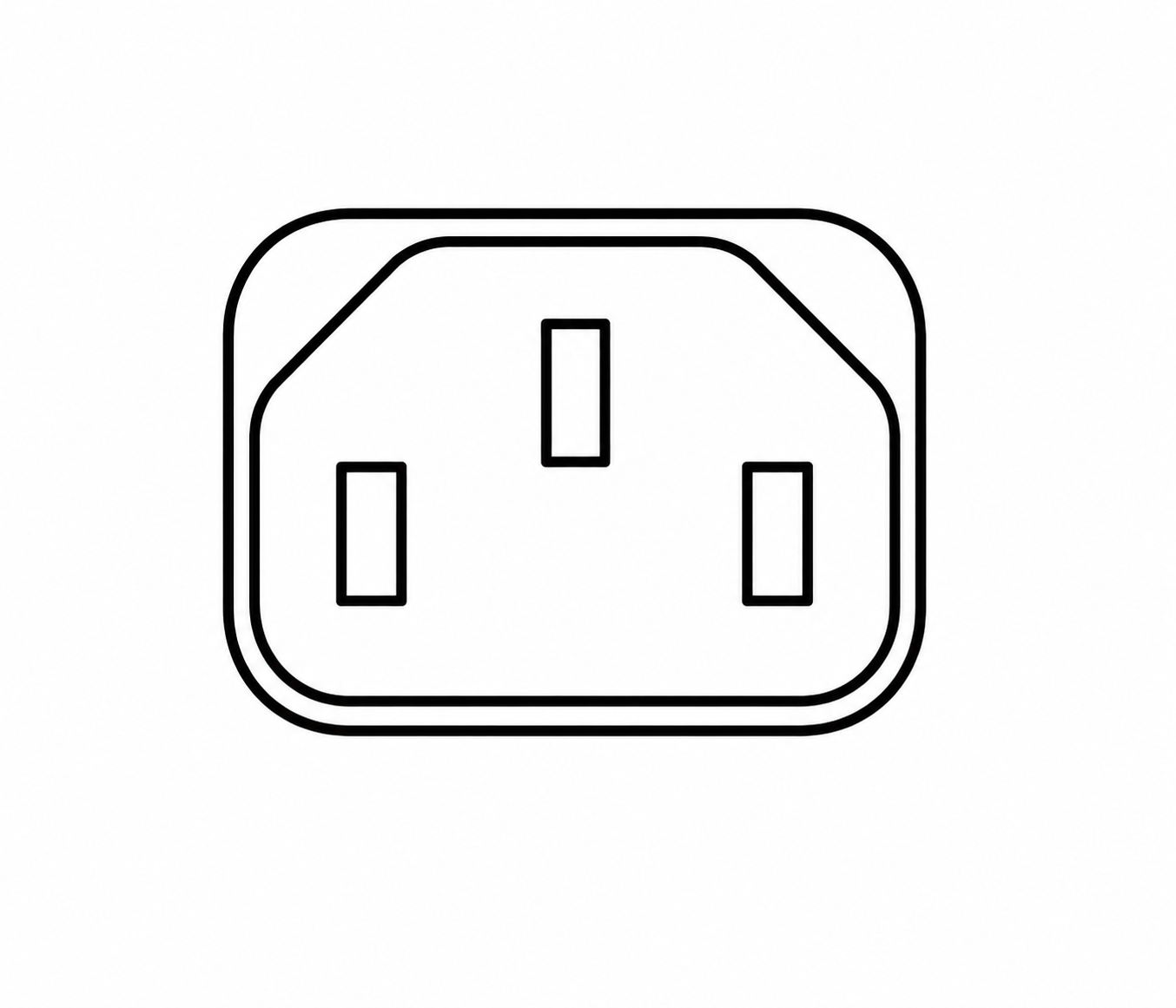
The IEC C13 is a three-pole appliance connector with an earth conductor. It is used, amongst other things, in PCs, monitors, printers, switches, servers and many other devices. The standard counterpart on the appliance is the IEC C14.
- C13 → C14: compatible
- C13 → C18: fits
- C13 → C16: does not fit
Why can a C13 plug also be used with a C18 socket?
C18 is the two-pole device connector for C17 and has no earth contact. However, its design also allows for a C13 plug. The live and neutral conductors are connected; the additional earth contact on the C13 has no corresponding contact on the C18.
Practical implication: An appliance with a C18 connection, which is normally operated with a C17 connection cable, can in principle also be operated with a technically suitable C13 connection cable. The reverse is not true: a C17 cannot replace a C13 on a C14 appliance.
IEC C15 – Coupling for hot appliances for C16 and also C14
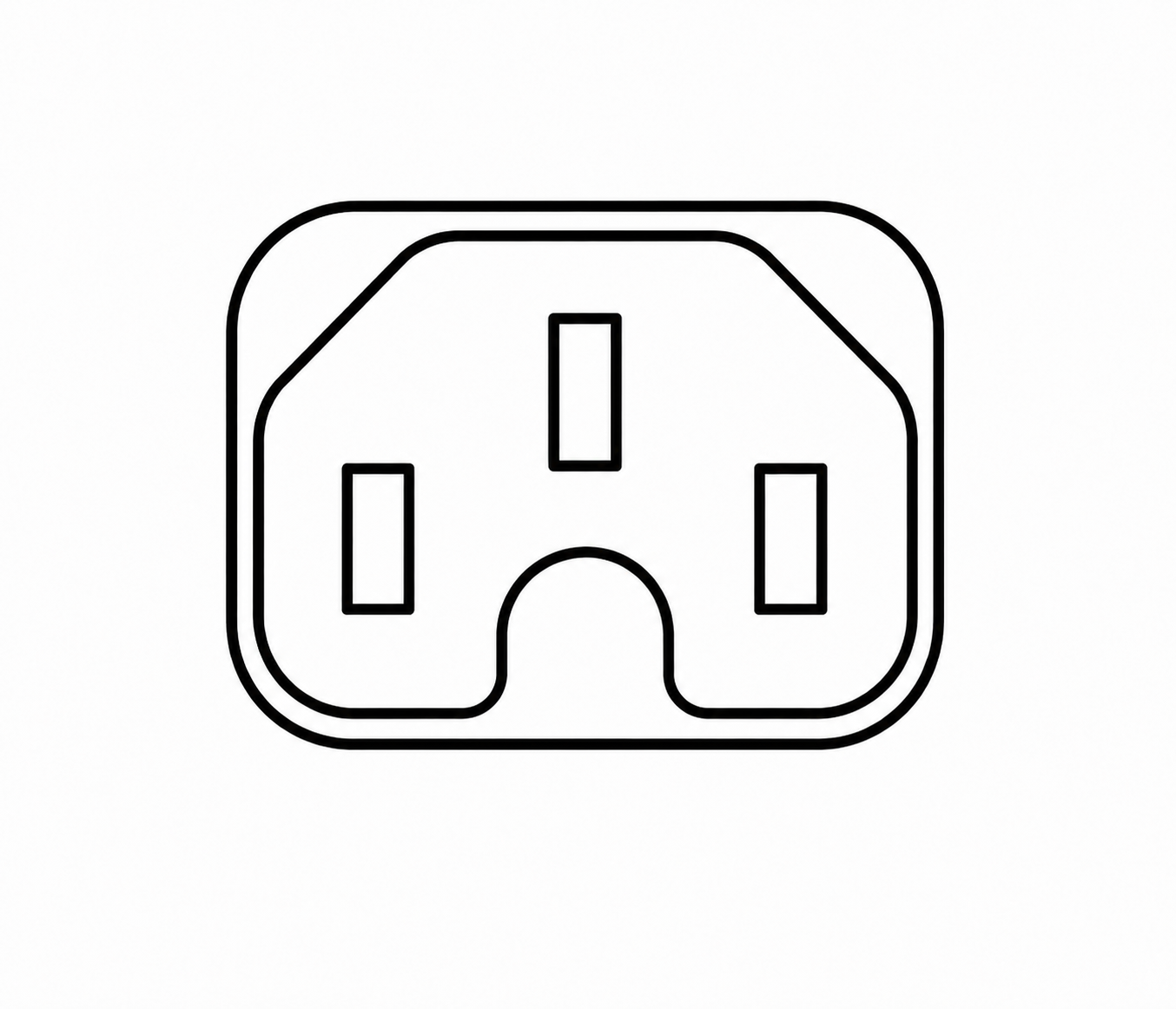
The IEC C15 is very similar to C13 and also has an earth conductor. The small but crucial difference is the additional shape-coding for the IEC C16 hot appliance connection. C15 is designed for higher temperature requirements than C13.
- C15 → C16: compatible
- C15 → C14: fits
- C13 → C16: does not fit
Why does C15 fit into C14, but C13 does not fit into C16?
The additional shaping of the C15 allows it to connect to a C16. On a standard C14 appliance plug, this shaping does not get in the way, which is why C15 also fits there. C13, on the other hand, does not have the recess required for C16 and is mechanically prevented from fitting into a C16 socket.
Rule of thumb: A suitable C15 connection cable can replace a C13 cable on a C14 appliance. However, a C13 cable cannot replace a required C15 cable on a C16 appliance connection.
IEC C17 – two-pole, without earth conductor, for C18
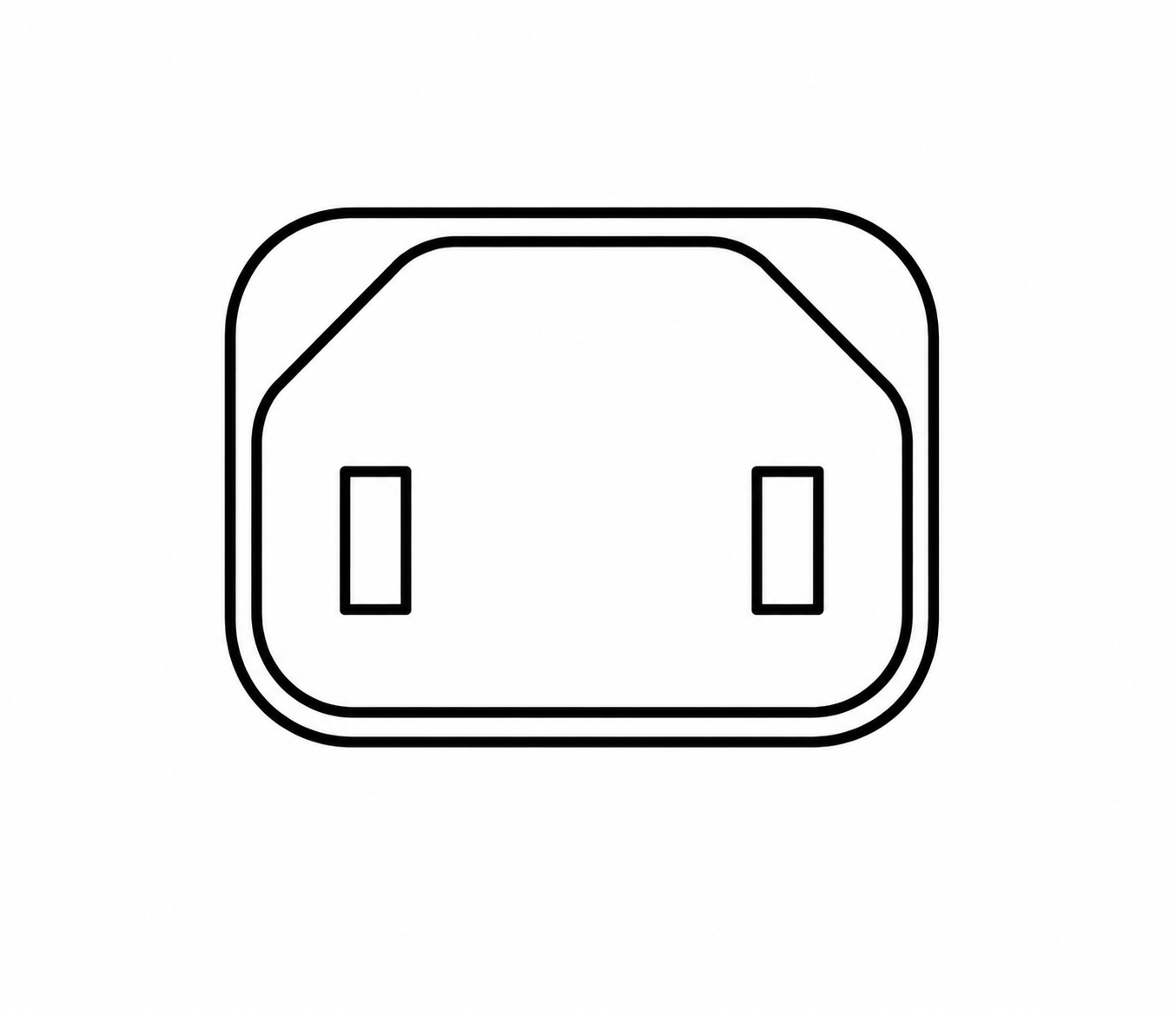
The IEC C17 is two-pole and has no earth contact. It is intended for appropriately designed appliances without a PE connection. Its standard counterpart is the IEC C18 appliance plug.
- C17 → C18: fits
- C17 → C14: does not fit
Why is the C17 so easily confused with the C13?
C13 and C17 are the same basic size and have a very similar external profile. The key difference lies inside: C13 has the earth contact, whilst C17 does not. With built-in appliances or small product photos, this difference is easily overlooked.
Important: A C17 connection cable is not a substitute for a C13 cable on a C14 appliance connection. The protective earth conductor is missing and the mechanical design prevents the connection.
Which connection cable can replace which?
C17 and C13 on a C18 appliance
C17 → C18 is compatible
C13 → C18 fits
Therefore, on a C18 device, a suitable C17 connection cable can generally be replaced by a suitable C13 connection cable.
Not the other way round: C17 does not fit on a C14 and cannot replace a C13 cable there.
C13 and C15 on a C14/C16 device
C13 → C14 fits
C15 → C14 fits
C15 → C16 fits
C13 → C16 does not fit
Therefore, a suitable C15 cable can be used on a C14 device to replace a C13 cable. On a C16 device, a C15 cable is required; a C13 cable is not compatible there.
Why is compatibility not possible in both directions?
The different IEC 60320 profiles are deliberately coded. This prevents unsuitable combinations mechanically. With C13 and C15, the higher temperature requirement of the C15/C16 connection is particularly relevant. With C13 and C17, the protective conductor is the key difference: C13 has a PE, whilst C17 does not.
The shape-coding system thus ensures that a technically less suitable plug cannot simply be used on a more demanding or differently designed appliance socket.
Identifying C13, C15 or C17 correctly
As all three connectors are the same size externally, the selection should not be based solely on the external shape. Check the plug face and the appliance connection:
Identifying C13
Three contacts, including an earth conductor. Typical mating connector: C14.
Identifying a C15
Three contacts, including an earth conductor, plus additional shape coding. Typical counterpart: C16.
Identifying C17
Two contacts without an earth conductor. Typical counterpart: C18.
Frequently asked questions about C13, C15 and C17
What is the main difference between C13, C15 and C17?
C13 and C15 are three-pole and have an earth conductor. C15 is also designed for higher temperature requirements and is mechanically coded for C16. C17 is two-pole and has no earth conductor.
Why are C13, C15 and C17 so easy to confuse?
Externally, the three connectors are the same basic size and have a very similar profile. The key differences lie in the mating face and are therefore not always immediately visible in photographs or when the connectors are fitted.
Does a C15 connector fit into a C14 appliance plug?
Yes. C15 is normally intended for C16, but due to its shape it can also be connected to C14. The entire connection cable must be suitable for the respective application.
Does a C13 socket fit into a C16 appliance plug?
No. The mechanical coding of the C16 prevents the use of a standard C13 ‘cold’ appliance connector. A suitable C15 ‘hot’ appliance connector is required for C16.
Can a C13 cable be used instead of a C17 cable?
In principle, yes, for a device with a C18 connection, provided the C13 connection cable is technically suitable for the application. The additional protective earth contact on the C13 has no corresponding contact on the C18.
Can a C17 cable be used instead of a C13 cable?
Not on a C14 appliance socket. The C17 does not have an earth contact and does not fit mechanically onto a C14 socket.
Is it sufficient if the IEC connector fits mechanically?
No. In addition, the electrical and thermal requirements of the appliance, the cable cross-section, the mains plug and the necessary approvals must be taken into account.
Suitable connection cables and further information
DINIC mains cables with IEC C13 connectors for appliances with a C14 socket → DINIC mains cables with IEC C15 connectors for high-temperature applications, suitable for C16 and compatible C14applications → DINIC mains cables with IEC C17 two-pole connectors for devices with a C18 connection → Overview of IEC 60320 appliance plugs – compare other types such as C5, C7, C19 and C21 →
For different lengths, cross-sections, country-specific mains plugs or project-specific designs, please refer to the section on power cable assembly and custom-made products for OEMs.
Safety note: This overview is intended to assist with the selection and differentiation of IEC 60320 connectors. Before replacing a connection cable, the technical requirements of the appliance and the manufacturer’s specifications must be taken into account. Connectors must not be mechanically altered or forced into place.