
 German / Deutsch
  English
  French / Français
  Spanish / Español
  Dutch / Nederlands
  Italian / Italiano
  Polish / Polski
  Norwegian / Norsk
  Danish / Dansk
  Finnish / Suomi
  Swedish / Svenska
  Czech / Česky
  Greek / Ελληνικά
  Slovak / Slovenčina
  Slovenian / Slovenščina
  Estonian / Eesti
  Latvian / Latviešu
  Lithuanian / Lietuvių
  Hungarian / Magyar
  Romanian / Română
  Bulgarian / Български
  Portuguese / Português
 USA
USA  Canada
US power cables & sockets – NEMA 1-15P, 5-15P, 6-20P and hospital grade
Which power cable is the right one for the USA? It’s not just a question of Type A or Type B. Depending on the device and application, NEMA 1-15P, NEMA 5-15P, NEMA 6-20P or special hospital-grade versions may be required.
In addition, the device’s input, earth conductor, voltage, frequency, current rating, cable type and the approvals required for the USA or Canada must be taken into account.
Which US power cable do you need?
The main North American variants can be distinguished by plug type, earth conductor, voltage, current requirement and application.
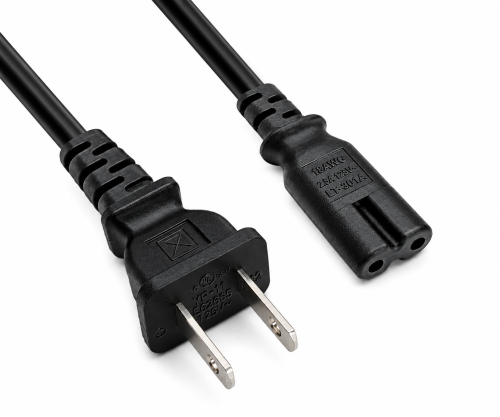
NEMA 1-15P
For insulated appliances without a protective earth conductor. In the MAG range, specifically NEMA 1-15P to IEC C7.
NEMA 1-15P power cable →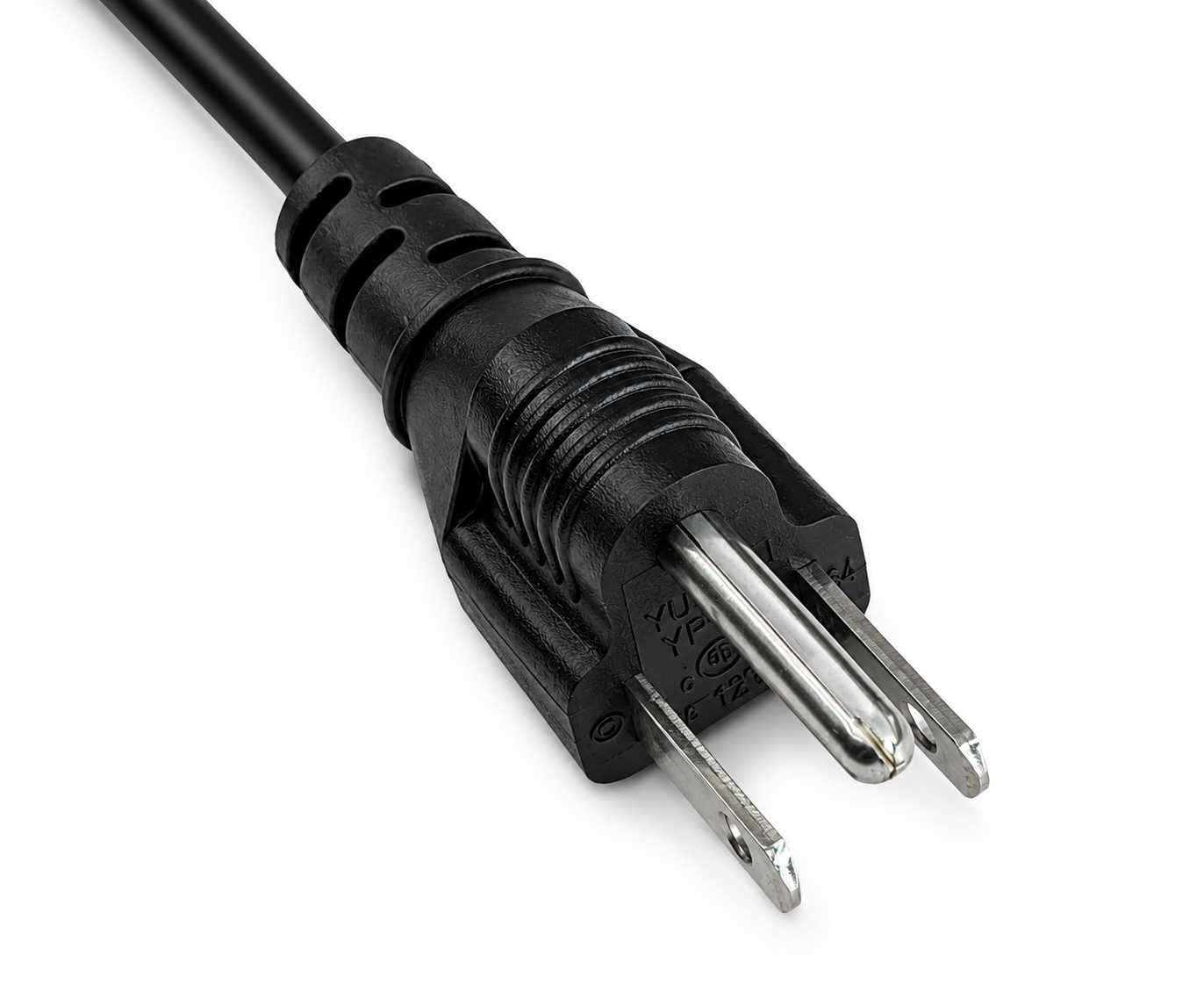
NEMA 5-15P
Standard solution for many earthed appliances with a protective earth conductor. Variants to IEC C5, C13, C15 and C19.
NEMA 5-15P power cable →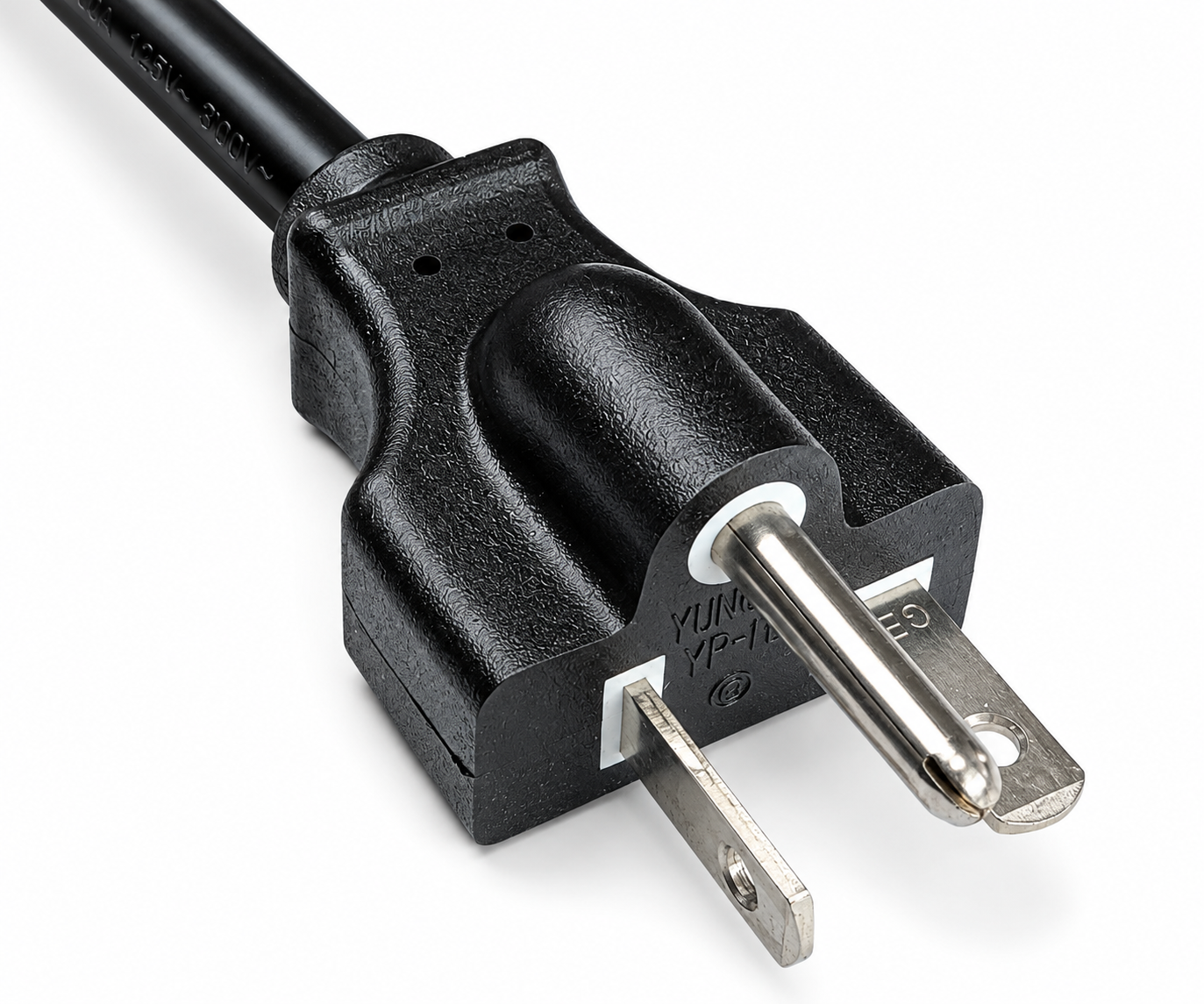
NEMA 6-20P
For higher-power 250 V applications. MAG offers versions to IEC C13 and IEC C19.
NEMA 6-20P power cable →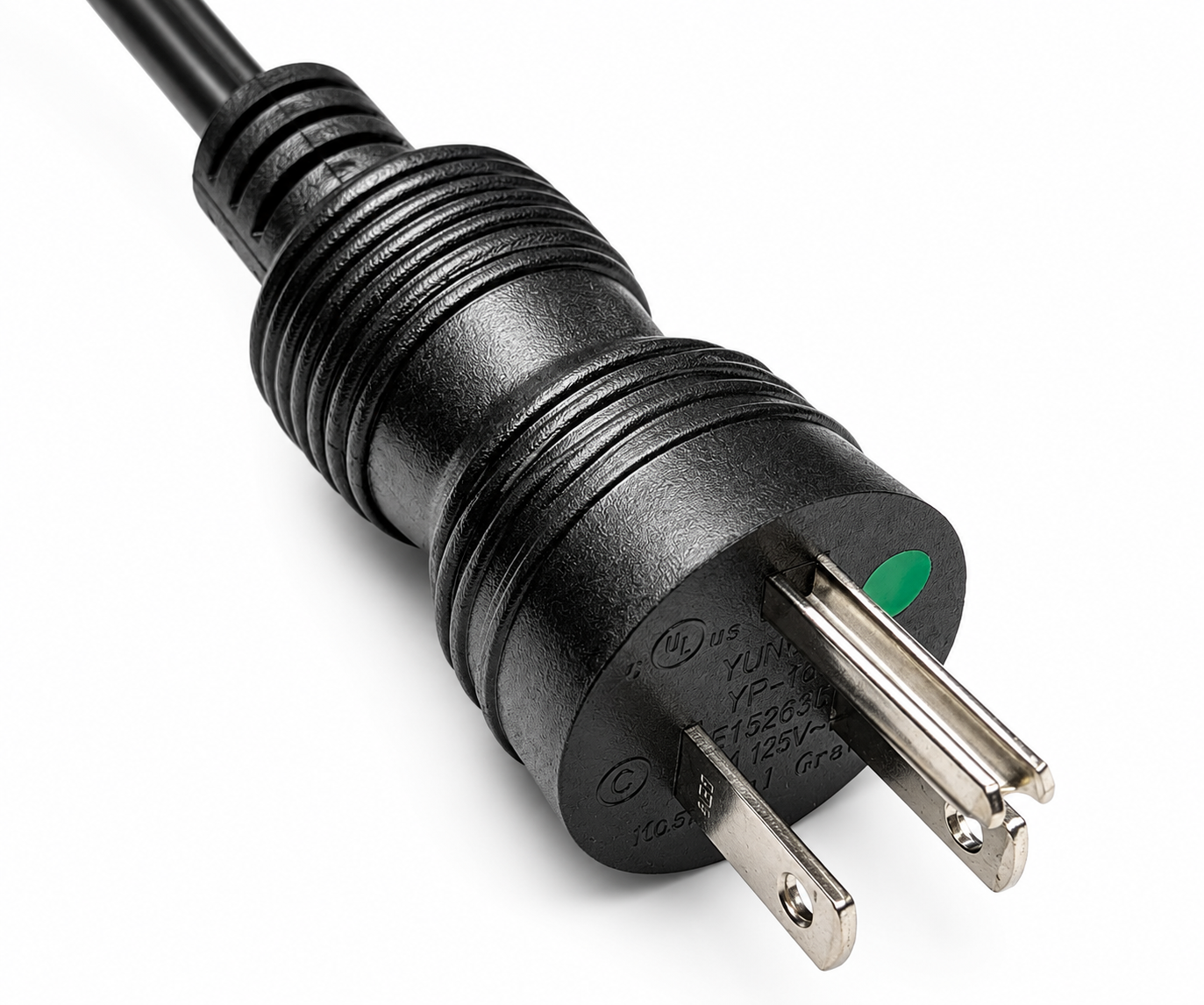
Hospital Grade
NEMA 5-15P Hospital Grade to IEC C13 for applications meeting relevant North American requirements.
Hospital Grade power cable →Common socket types in the USA – Type A and Type B
In private homes, hotels, offices and many everyday applications in the USA, Type A and Type B sockets are the most common.
Type A is used with a 2-pin NEMA 1-15P plug. Type B also features a protective earth contact and is used with a 3-pin NEMA 5-15P plug.
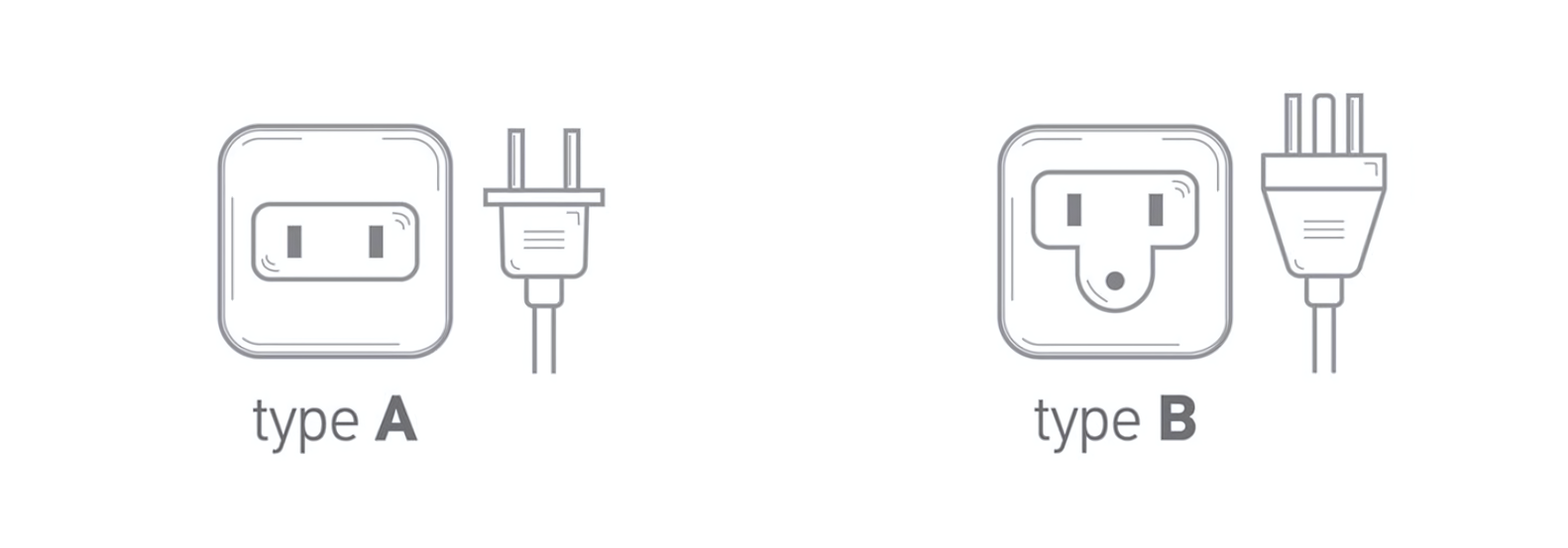
| Plug type | Design | Earth pin | Typical application |
|---|---|---|---|
| Type A / NEMA 1-15P | 2-pin | No | Equipment with protective insulation but without a protective conductor |
| Type B / NEMA 5-15P | 3-pole | Yes | Earthed appliances with a protective conductor |
Quick decision guide for US power cables
Mains voltage in the USA: 120 V is typical – but that’s not the whole story
For many standard socket and appliance applications in the USA, 120 V at 60 Hz is typical. Therefore, for a device from Europe, it must be checked whether it is suitable for this mains supply.
Many modern switching power supplies have a wide-range input. However, a suitable US plug alone does not automatically make a device designed exclusively for 230 V suitable for a 120 V supply.
Special case: NEMA 6-20P – 250 V applications
The statement ‘USA = 120 V’ must not be applied across the board to every NEMA plug system. NEMA 6-20P is rated for 20 A / 250 V and is used for devices and circuits designed for this purpose.
NEMA 1-15P / Type A – 2-pole without earth
NEMA 1-15P has two flat contact pins and no earth contact. This version is suitable for appropriately rated appliances that do not require an earth connection.
In the MAG range, you will find NEMA 1-15P power cables, particularly those compliant with IEC 60320 C7. The C7 is connected to a suitable IEC C8 equipment inlet.
View NEMA 1-15P / 2-pole
NEMA 5-15P / Type B – 3-pin with earth
NEMA 5-15P features two flat live contacts and an additional earth contact. The 3-pole version is one of the most important connection solutions for earthed appliances in the USA and Canada.
Depending on the appliance, MAG offers a range of IEC appliance connectors, including IEC C5, C13, C15 and C19.
View NEMA 5-15P / 3-pole
NEMA 6-20P – for higher-power 250 V applications
NEMA 6-20P is a 3-pole plug system with a protective earth conductor for applications up to 20 A / 250 V. It is used, amongst other things, in professional IT, server, PDU, laboratory and industrial applications.
It is important to consider the entire connection cable. Whilst a NEMA 6-20P plug is rated for 20 A, the permissible current-carrying capacity of the complete cable may be lower due to the cable itself and the equipment connection.
MAG offers variants with IEC C13 and IEC C19 connectors.
View NEMA 6-20P power cables
Hospital-grade power cable with NEMA 5-15P
‘Hospital Grade’ refers to a specially designed and marked North American plug connection for applications with specific requirements.
A well-known distinguishing feature is the ‘Green Dot’ – the green dot on the hospital-grade plug. MAG offers hospital-grade power cables with NEMA 5-15P to IEC 60320 C13.
Which IEC equipment connector is required?
As well as the NEMA mains plug, the appliance side is crucial. The appliance connector on the cable must match the corresponding IEC appliance socket.
| Cable end | Equipment inlet | Typical applications |
|---|---|---|
| IEC C7 | IEC C8 | 2-pin appliances and power supplies |
| IEC C5 | IEC C6 | Power supplies and compact devices |
| IEC C13 | IEC C14 | IT, monitors, industrial and systems engineering |
| IEC C15 | IEC C16 | Suitable devices with a C16 input |
| IEC C19 | IEC C20 | Servers, PDUs and higher-power systems |
UL and CSA for power cables for the USA and Canada
Particularly for B2B, OEMs, equipment manufacturers, industry and export projects, the mechanical fit of the plug alone is not sufficient. The target market specification and the necessary approvals must also be taken into account.
USA · UL
Canada · CSA
The approvals and technical specifications of the specific item are always decisive.
US power cables for B2B, OEMs and equipment manufacturers
For mass-produced devices and export projects, the power cable should be considered from the outset as an integral part of the target market specification.
Frequently asked questions about US power cables and NEMA plugs
What types of plugs are used in the USA?
For many standard applications, Type A and Type B – or NEMA 1-15P and NEMA 5-15P – are relevant. For specialised applications, other NEMA systems exist, such as NEMA 6-20P.
What is the difference between NEMA 1-15P and NEMA 5-15P?
NEMA 1-15P is a 2-pole plug and does not have a protective earth conductor. NEMA 5-15P is a 3-pole plug and has a protective earth contact.
What is NEMA 6-20P?
NEMA 6-20P is a 3-pole plug system with an earth conductor for applications up to 20 A / 250 V.
What does ‘Hospital Grade’ mean?
‘Hospital Grade’ refers to a specially designed and marked North American plug connection that meets additional requirements. Further information can be found in the Hospital Grade Guide .
Is the voltage in the USA always 120 V?
120 V / 60 Hz is typical for many standard socket applications. However, there are also circuits and plug systems designed for higher voltages. NEMA 6-20P, for example, is specified for up to 250 V.
Can I simply use a US power cable to power a German 230 V appliance?
Not necessarily. The appliance or power supply must be rated for the voltage and frequency available at the point of use. The mains lead does not alter the electrical rating of the appliance.
Are US power cables also suitable for Canada?
Type A and Type B are also used in Canada. However, for professional applications, the technical requirements and approvals for the respective cable required in Canada must be taken into account.
Go directly to the relevant US power cable category
Select the required NEMA version or use the power cable finder if the mains plug and device connection have not yet been clearly determined.