ENEC 10 instead of the VDE logo on the plug: why this is not a disadvantage
Many customers are familiar with and expect to see the classic VDE test mark from Germany. However, if a MAG power cable bears the ENEC 10 mark instead of a VDE logo alone, this is not a disadvantage and does not indicate lower quality. The number 10 identifies the certifying body, VDE. This page clearly explains to B2B customers and new customers why ENEC 10 is a high-quality European certification mark with a recognisable VDE connection.
10 = VDE as the certifying bodyEuropean ENEC schemefewer different logosclearer for international production runs
VDEwell-known German test mark
→
ENEC 10European mark, position 10 = VDE
In short: if the VDE logo alone is missing, ENEC 10 does not mean ‘less than VDE’, but rather ‘VDE within the European ENEC system’.
ENEC 10 is VDE-relatedThe number 10 stands for VDE as the issuing certification body.
VDE remains well-knownIn Germany, VDE is very familiar and is immediately recognised by many buyers.
ENEC is European in scopeENEC was created to standardise national test marks across Europe.
CE remains separateCE is the statutory manufacturer’s declaration and is not replaced by ENEC.
If you can’t see the VDE logo: ENEC 10 is not a disadvantage
If a VDE mark alone was previously expected, ENEC 10 may seem unfamiliar at first glance. This is precisely where this page comes in: it explains, without exaggeration, why ENEC 10 should not be seen as a downgrade. The mark stands for ENEC certification within the European system, and the number 10 indicates VDE as the issuing certification body.
VDE is better known: particularly in Germany and amongst many technical buyers.
ENEC 10 is more European: a more uniform form of certification for various European target markets.
ENEC 10 effectively incorporates the VDE reference: the number 10 identifies VDE as the issuing body.
Fewer different logos: instead of numerous national test marks, a standardised ENEC mark can simplify labelling.
Why MAG opts for ENEC 10 on many power cables
MAG specifically opts for ENEC 10 certification for many power cables, particularly appliance connectioncables, rather than relying solely on a VDE mark. For customers, this means that even if the familiar VDE logo does not appear separately on the plug, the VDE reference remains visible via the code number 10 within the European ENEC system.
VDE remains recognisable: ENEC 10 refers to VDE as the certifying body.
European benefit: a more uniform test mark for different EU countries and international product ranges.
Fewer logos: the number of different national test marks on the plug can be reduced.
Important for customers: ENEC 10 is not inferior to VDE, but requires more explanation because the VDE logo is better known in Germany.
Practical note: The ENEC 10 designation should always be checked on a product-by-product basis. MAG only promotes ENEC 10 where certification for the specific product is actually documented.
ENEC 10: European test mark with a VDE reference via the code number 10
Comparison: the VDE mark alone and ENEC 10
Both marks can inspire confidence in customers. The difference lies primarily in their presentation and area of application: VDE is very well known nationally, whilst ENEC 10 is the more European approach with a recognisable VDE association.
Feature
VDE test mark
ENEC 10
Perception
Very well known and established in Germany.
Less well-known in Germany, but a technically robust European test mark.
Testing body reference
Direct VDE mark.
The number 10 indicates VDE as the issuing body.
European benefits
A strong national symbol of trust.
A more uniform European mark, particularly useful for international product ranges.
Plug marking
Can be supplemented by additional national marks depending on the market.
Can reduce the mix of logos and standardise multiple national test marks on the plug.
Communication to customers
Easy to explain: “VDE-tested”.
Can be explained as: “ENEC 10 = European ENEC mark with VDE as the issuing body”.
Brief explanation for procurement and technical departments: “Products bearing ENEC 10 are not an inferior alternative to the VDE mark. The number 10 refers to VDE as the certifying body. ENEC 10 thus combines the VDE reference with a more standardised marking across Europe.”
Why having fewer logos on the plug can make sense
International power cables are frequently used or resold in several European countries. In the past, products often featured a combination of several national test marks. ENEC helps to standardise this labelling.
A tidier labelling scheme: a clear ENEC mark instead of many different logos.
Better for mass-produced items: more standardised plug marking for multiple European target markets.
Fewer queries from the purchasing department: with a brief explanation such as ‘ENEC 10 = VDE in the ENEC system’.
More professional for B2B: technical safety certification rather than a purely visual collection of logos.
This is how ENEC 10 should be explained in the data sheet or quotation
To ensure customers fully understand the changeover, ENEC 10 should not simply be presented as an unfamiliar logo. A brief explanation in the product description, quotation or data sheet clearly highlights the benefits.
1Mention ENEC 10Clearly state the specific test mark alongside the product.
2Explain the VDE referenceExplain that “10” is the VDE code.
3Highlight the European benefitA standardised mark instead of different national logos.
Important: ENEC 10 does not replace the CE marking
CE and ENEC 10 serve different purposes. CE is the statutory conformity marking for relevant product groups within the European Economic Area. ENEC 10 is an additional, voluntary safety certification with independent certification and a VDE reference via the code number 10.
Mark
Function
What the customer can infer from this
CE
Statutory manufacturer’s declaration for relevant product groups.
The product is intended to comply with the applicable EU requirements and be eligible for placing on the market within the EEA.
VDE
Well-known German test mark.
Highly recognisable, particularly in the German market.
ENEC 10
European ENEC mark; the number 10 stands for VDE.
Strong evidence for B2B, international procurement and more consistent labelling.
Benefits for procurement, engineering and quality assurance
ENEC 10 is particularly useful when customers expect technical approval, verifiable proof of safety or more standardised European labelling.
For procurement: less uncertainty when the ENEC 10 mark is printed instead of VDE.
For engineering: clear attribution to the issuing body, VDE, via code number 10.
For quality assurance: stronger justification for international approvals.
For product ranges: fewer variations and a more consistent mix of logos for cables used across Europe.
What does this mean for your procurement?
If an ENEC 10 mark is displayed on a MAG power cable, this should make one thing clear above all to B2B customers: this is not a lesser alternative to the familiar VDE mark, but a European test mark with VDE as the certifying body.
Practical benefits: ENEC 10 simplifies technical classification in professional procurement, tenders and product ranges used across Europe. At the same time, a more uniform marking can be used on the plug, rather than displaying several national test logos side by side.
The specific product always remains the decisive factor: whether it bears the ENEC 10, VDE or another test mark should be checked, if necessary, using the data sheet or product documentation.
Suitable power cables for professional procurement
When it comes to power cables, it is not just length, colour and plug type that matter. The target market, technical specifications, certification marks and traceable documentation are also crucial. mag-kabel.de provides support in selecting suitable national and international power cables.
No. ENEC 10 should not be regarded as inferior. The number 10 refers to VDE as the certifying body. VDE is better known in Germany, but ENEC 10 is the more European way of presenting the certification with reference to VDE.
Why doesn’t it just say ‘VDE’ on the plug, then?
For products used internationally, ENEC 10 may be more appropriate because it uses a more standardised European test mark. This helps to reduce the number of different national logos on the plug.
Can ENEC 10 replace various national certification marks?
In many European procurement processes, ENEC can simplify the mix of logos, as the scheme was specifically created to provide a more uniform European assessment. Nevertheless, project- or country-specific requirements should always be checked on a product-by-product basis.
Does ENEC 10 replace the CE marking?
No. CE remains the statutory conformity marking for the relevant product groups. ENEC 10 is an additional, voluntary safety certification and does not replace CE.
Why does MAG use ENEC 10 instead of just VDE for many power cables?
For many power cables, particularly appliance connection cables, ENEC 10 is a sensible European labelling option for MAG. The number 10 highlights the VDE reference, whilst allowing the number of different national logos on the plug to be reduced. Product-specific certification always remains the decisive factor.
Can ENEC 10 be advertised for every product?
No. ENEC 10, VDE or other test marks should only be mentioned in product information, quotations or data sheets if certification for the specific product is actually documented.
Conclusion: ENEC 10 is not a weaker mark than VDE. It is a European test mark with a recognisable link to VDE via the number 10. This is why MAG specifically opts for ENEC 10 on many power cables, particularly appliance connection cables, provided that certification for the relevant product is confirmed. Particularly in the case of international mains cables, ENEC 10 may be the better mark, as it combines the familiar VDE reference with a more standardised European presentation.
 German / Deutsch
  English
  French / Français
  Spanish / Español
  Dutch / Nederlands
  Italian / Italiano
  Polish / Polski
  Norwegian / Norsk
  Danish / Dansk
  Finnish / Suomi
  Swedish / Svenska
  Czech / Česky
  Greek / Ελληνικά
  Slovak / Slovenčina
  Slovenian / Slovenščina
  Estonian / Eesti
  Latvian / Latviešu
  Lithuanian / Lietuvių
  Hungarian / Magyar
  Romanian / Română
  Bulgarian / Български
  Portuguese / Português
 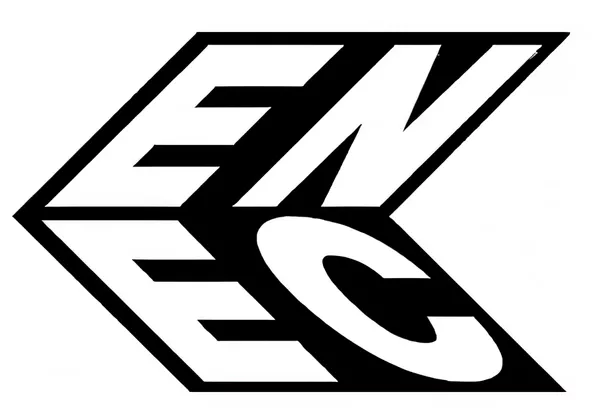 ENEC 10: European test mark with a VDE reference via the code number 10